Monday, March 23, 2009

A Happy Ending & A Touching Story (Prompt 5, Chapter 233)

In this final chapter of the novel, Christopher ends with, "And I know I can do this because I went to London on my own, and because I solved the mystery of Who Killed Wellington? and I found my mother and I was brave and I wrote a book and that means I can do anything" (221). This happy ending makes me incredibly proud of Christopher. He faced so many obstacles and uncomfortable situations and faced them all with courage and strength. He is very correct in saying that by accomplishing all of this, he can then in fact do anything.
I found the entire book to be quite touching. It is a moving story of how one boy can face seemingly simple situations and conquer them in his most unique manner. The culmination of the novel brought home Mark Haddon's purpose in showing the nature of autism in a light that makes the world understand why these children live the way they do.

Friday, March 20, 2009

The Perfect Title (Prompt 18)

The Curious Incident of the Dog in the Night-time is absolutely the ideal title for my independent reading novel. It is a simple, yet perfect description of the novel's main conflict. The book is written from the perspective of the 15 year old autistic boy, Christopher John Francis Boone. He discusses the writing of the novel throughout various chapters, but doesn't mention the title. Based on what I have picked up on his character and his preferences, I would say this title suits both him and the story well.
The choice of the words "curious incident" is what really seals the deal. "Curious" suggests how Christopher felt after finding the dead dog and what propelled him to follow Sherlock Holmes's influence in trying to get to the bottom of this puzzling mystery. "Incident" perfectly depicts how Christopher views the situation. It just sort of happened; he doesn't understand why or how, but here was his neighbor's dog lying with a garden fork sticking out of him in the middle of the night. The simplicity, yet spot-on diction combine to make this the title of all titles.

Thursday, March 19, 2009

Haddon's Use of Language (Prompt 11, Chapter 227)

In Chapter 227, Christopher is between the train and his mother's house. He needs to get on the subway in order to complete his journey, but he has great difficulty in doing so. He spends five and a half hours next to the subway, refusing to get on, rocking himself back and forth, suffering in pain from the loud sounds and trying not to get too close to anyone else. This was an exceptionally frustrating chapter for me as a reader because I wanted to shout at him to just get on the subway to end his misery. Despite my aggravation, I found Mark Haddon's writing style to be remarkably effective. He so acutely described Christopher's surroundings and pain that I could picture him sitting, suffering, on the subway platform. I desperately wanted to be on that platform guiding Christopher onto the subway, even though I knew he would never take the advice or help from a stranger. The entire chapter reaffirmed Christopher's difficult task in trying to lead a relatively normal life. Haddon's noteworthy style evoked serious emotions in me, which I view as the mark of extraordinary writing.

Wednesday, March 18, 2009

"I see everything." (Prompt 8, Chapter 181)

Chapter 181 continues to explain the curious and intricate mind of Christopher John Francis Boone, the autistic 15 year-old. He opens the chapter with, "I see everything" (140). He goes on to describe why he doesn't like being in new places. "When I am in a new place, because I see everything, it is like when a computer is doing too many things at the same time and the central processor unit is blocked up and there isn't any space left to think about other things" (143). This ability to see everything explains why he is so good at chess, maths, and logic.
I took an important message away from this chapter that I could connect with the insight shared previously in the book. To unknowing outsiders, Christopher can be classified as just another autistic kid who acts out or shuts down whenever he feels like it. However, this incredible novel has been able to thoroughly explain why Christopher acts the way he does. He can't simply be categorized according to the problem he suffers from. He is a unique human being with a different world view than what is perceived by society as "normal". Sure, this may make him "special", but either way people cannot judge him without getting to know what goes on inside his head. This book has done a remarkable job of providing that insight which desperately needs to be shared with the world.

Tuesday, March 17, 2009

Reach for the Stars (Prompt 15, Chapter 173)

In Chapter 173, Christopher talks about the constellations he sees above the roof of the shed. I believe the stars and constellations represent Christopher's hopes and dreams. He has such high hopes for his future; he wants to get A's on his A-Level Maths, take A-Level Physics, and some day become an astronaut. His dreams, like the stars, shine so brightly, but seem so far away. However, Christopher has shown throughout the novel that he can conquer the many obstacles that his autism and life throw at him in coming closer to achieving his goals.

Monday, March 16, 2009

Parental Insight (Prompt 1, Chapter 127)


Chapter 127 was both disturbing and enlightening. Christopher had continued sleuthing when his father had told him not to. In this chapter, his father finds Christopher's notes, and explodes at him. Christopher describes the scene, "It was like someone had switched me off and then switched me on again. And when they switched me on again I was sitting on the carpet with my back against the wall and there was blood on my right hand and the side of my head was hurting. And Father was standing on the carper a meter in front of me looking down at me and he was still holding my book in his right hand, but it was bent in half and all the corners were messed up, and there was a scratch on his neck and a big rip in the sleeve of his green and blue check shirt and he was breathing really deeply" (83).
Earlier in the chapter, Christopher's father had been cursing at him and yelling in his face. My initial reaction to the entire scene was disgust with the father. How could be possibly blow up in Christopher's face like that? That's not an okay reaction for any parent, let alone the parent of an autistic child. However, after reflecting on the situation a bit, I have realized how Christopher's father must have felt throughout Christopher's entire life. He must become frustrated daily with having to repeat himself and constantly take care of his son. He didn't ask for any of this to happen, and it must be incredibly difficult for him to carry on each day without exploding. I still can't completely condone his actions in this chapter, but I perhaps understand why he acted the way he did.

Sunday, March 15, 2009

A "Proper Novel" (Prompt 16, Chapter 37)

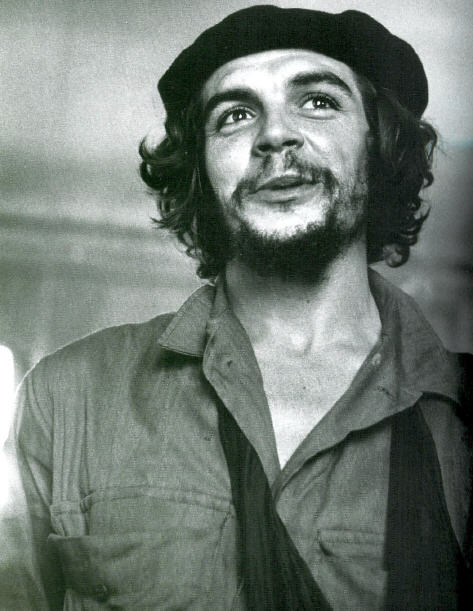
An important aspect of this novel is the fact that Christopher does not lie. In Chapter 37 he describes, "This is another reason why I don't like proper novels, because they are lies about things which didn't happen and they make me feel shaky and scared. And this is why everything I have written here is true" (19, 20). Upon reading this statement, I immediately thought of Che, The Motorcycle Diaries, and the meaning of a "proper novel." Could Che's Motorcycle Diaries be considered a proper novel when it includes in the title: "Notes on a Latin American Journey"? It was supposed to be his travel notes from the trip, which then he went back to edit before publishing. The concept of editing your diary seemed strange to me throughout reading the book. How was I supposed to be able to tell when a situation had been greatly exaggerated to make Che seem like more a of a hero? Why would he edit his thoughts from when he was younger? Did he publish the book only to make him seem more idealistic or like a down-to-earth common man? Isn't the book then a web of fabricated lies? Sure, the events probably transpired, but how can we be so sure where the line of truth and gross exaggeration is crossed?
This type of "novel" would sicken Christopher, and his directness displayed in the quote above is part of the reason I enjoyed his novel so much. Of course, the Curious Incident is a fictional piece of work, but it didn't pretend to be something that it wasn't. Mark Haddon had Christopher speak his mind and write exactly how he felt, and I truly appreciated this honesty.

Saturday, March 14, 2009

Christopher's Character (Prompt 17, Chapter 73)


There is a vast amount of direct characterization throughout this novel. This is mainly done because it is told through Christopher's point of view, and as he shares on page 19, he "does not tell lies." Thus, he is quite blunt in his descriptions of himself and the people and environment surrounding him. In Chapter 73, he specifically lists his "Behavioral Problems," some of which include "not talking to people for a long time, not eating or drinking anything for a long time, not liking being touched, not liking being in really small places with other people, groaning, or not eating food if different sorts of food are touching each other" (46). The fact that Christopher is so explicit in his descriptions of himself is truly insightful into the mind of an autistic child. Mark Haddon has done a fantastic job of characterizing this autistic boy and showing the world how someone with such limitations views life.

Friday, March 13, 2009

Sherlock Wannabe (Prompt 3, Chapter 97)

In Chapter 97, Christopher chooses to walk with his neighbor, Mrs. Alexander, whom he considers a stranger, in the park. This is very atypical of Christopher, as he is very uncomfortable around people he doesn't know well. However, Christopher wants, almost more than anything else, to get to the bottom of his mystery: who killed Wellington? Thus, despite the fact that his father blatantly told him to stop sleuthing, Christopher finds a way around it when Mrs. Alexander says she has something important to share with him. Christopher wants to be like his favorite fictional character, Sherlock Holmes, as a detective because it will give his life purpose and meaning. He is a very curious young boy, as the title describes. He is constantly reading up on his many scientific or mathematic interests. The mystery of Wellington is yet another discovery to be made. This yearning inquisitiveness propels him into awkward situations that he usually couldn't handle, like the encounter with Mrs. Alexander in the park. I am proud of him for fighting through his discomfort to get to the bottom of his mysterious case.

Thursday, March 12, 2009

Prime Numbers=Life? (Prompt 14, Chapter 19)

"Prime numbers are what is left when you have taken all the patterns away. I think prime numbers are like life. They are very logical but you could never work out the rules, even if you spent all your time thinking about them" (12).

This quote clearly defines Christopher's character and explains his behavior throughout the novel. Christopher is a very logical person who uses patterns to define his mannerisms. For example, on his way to school on the school bus each morning he counts cars. Three red cars in a row means a "Quite Good Day," four red cars in a row means a "Good Day," five cars in a row means a "Super Good Day," and three yellow cars in a row means a "Black Day." On "Black Days" Christopher sits in a corner reading this book and doesn't talk to anyone, eat anything, or take any risks. He does all of this to keep things a certain way. As long as he can classify his life by these patterns, he can determine how to act on a specific day. The interesting aspect of this quote is how Christopher interprets life without patterns. For him, life without patterns is meaningless and confusing. This is why people, emotions, and spontaneous life perplexes him so. He desperately tries to figure out why people act the way they do, but as we all know, sometimes there is simply no rhyme or reason. Christopher cannot make these connections which is why he is easily frustrated, acts out, and generally lives the way he does.

Thesis

Che Guevara may have wanted to become an agent of benevolent change on the impoverished countries he saw on his motorcycle journey, but he turned out to be a very egotistical revolutionary whose impact is cast more in a negative light than a positive one.
This is being changed for tomorrow!

Wednesday, March 11, 2009

Ind. Reading Intro

My independent reading book is The Curious Incident of the Dog in the Night-time, by Mark Haddon. I'm quite a bit into it and have been keeping separate notes about my favorite passages. I'll be posting to the specific responses every day. Enjoy :)

My Do Now


This section of The Motorcycle Diaries has included many descriptions of the Inca people. What kind of reaction does Che have to their lifestyle? Does it change how he views the country or his journey? Explain.

Monday, March 9, 2009

Essential Questions


I believe Che wanted to make a name for himself, like many of us do. He started off as a young medical student. The medical profession is one that can lead to plenty of limelight, in helping patients, saving lives, and overall, doing something extremely rewarding as an occupation. His Motorcycle Diaries reflected this pompous attitude throughout his writing style. Che grew into a very passionate and even violent revolutionary as he matured. Still though, I believe he desired fame and an important title. He quickly moved up the ranks into Fidel Castro's number 2. He loved the power that came with the position and somewhat abused it by pushing soldiers over the edge. He left office ashamed in exile, yet he was still greatly remembered; perhaps not in the positive light many of us desire, but remembered nonetheless, and I feel like this is all he cared about.

Thursday, March 5, 2009

Chile in 6 Words


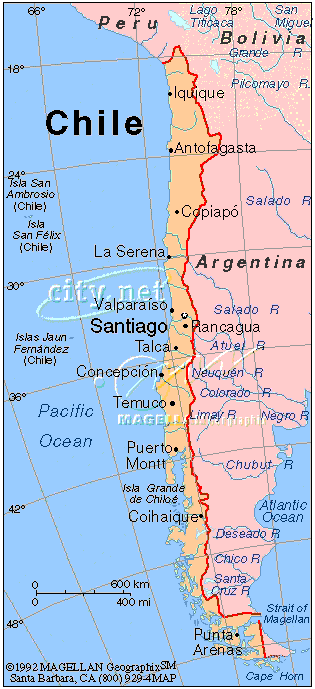
Stable, independent, democratic nation of hospitality.

Tuesday, March 3, 2009

Che in Chile


"It's a great pity that they repress people like this. Apart from whether collectivism, the 'communist vermin,' is a danger to decent life, the communism gnawing at his entrails was no more than a natural longing for something better, a protest against persistent hunger transformed into a love for this strange doctrine, whose essence he could never grasp but whose translation, 'bread for the poor,' was something which he understood and, more importantly filled him with hope" (78).
Che viewed this encounter with communism as a unique new experience. This first shed of light on this new ideology may impact how he embraces socialism down the road. He is already sensing people need a brighter future, and collectively may be the best way to reach that common goal.